Integrate legacy systems with ease

Integrate legacy systems with ease

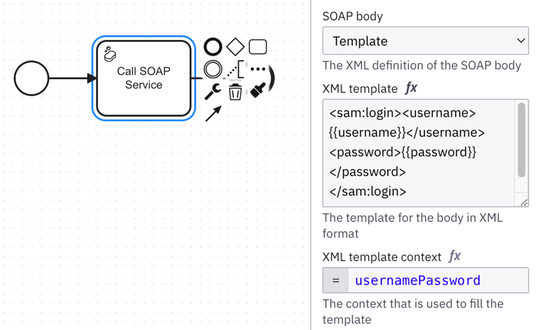
The SOAP connector allows Camunda users to interact with SOAP-based web services directly within BPMN-based processes. It provides a configurable way to call operations defined in a Web Services Description Language (WSDL) file, enabling integration with legacy systems and enterprise services that rely on the SOAP protocol. This connector makes it easy to pass data to and from SOAP services, handle authentication, and parse responses streamlining interoperability between Camunda and external systems.


Features and Benefits

WSDL-based operation discovery

Automatically detect and configure available operations from a provided WSDL file, ensuring accurate integration with enterprise SOAP APIs and reducing setup time.
Flexible message construction

Easily define input payloads using XML or expressions. Populate SOAP requests with dynamic data from your Camunda process variables to match the service's expected schema.

Custom headers and namespaces

Add custom SOAP headers and security tokens and define XML namespaces to meet specific API requirements; ideal for working with standards-compliant enterprise services.

Response mapping to variables

Map the SOAP response (or parts of it) directly to process variables, enabling further automation and decision-making in downstream tasks without additional parsing logic.

Support for authentication

Configure basic authentication credentials or use custom headers for secure communication with protected SOAP endpoints.

Legacy system integration

Bring older, mission-critical systems into modern automation workflows without rewriting services or building middleware.

Details

  • Marketplace release date -
  • Last Github commit -
  • Associated Product Group Categories:
    • Technical Protocols
  • Version Compatibility:
  • Used resources:

Support and documentation


Resources